Frog Holotype Error Corrected, Broadens Biodiversity Understanding
A decades-old taxonomic error involving a Peruvian poison frog has been corrected. Scientists reclassified a misidentified holotype specimen, impacting understanding of amphibian diversity and highlighting the crucial, yet sometimes fallible, role of physical specimens in taxonomy.
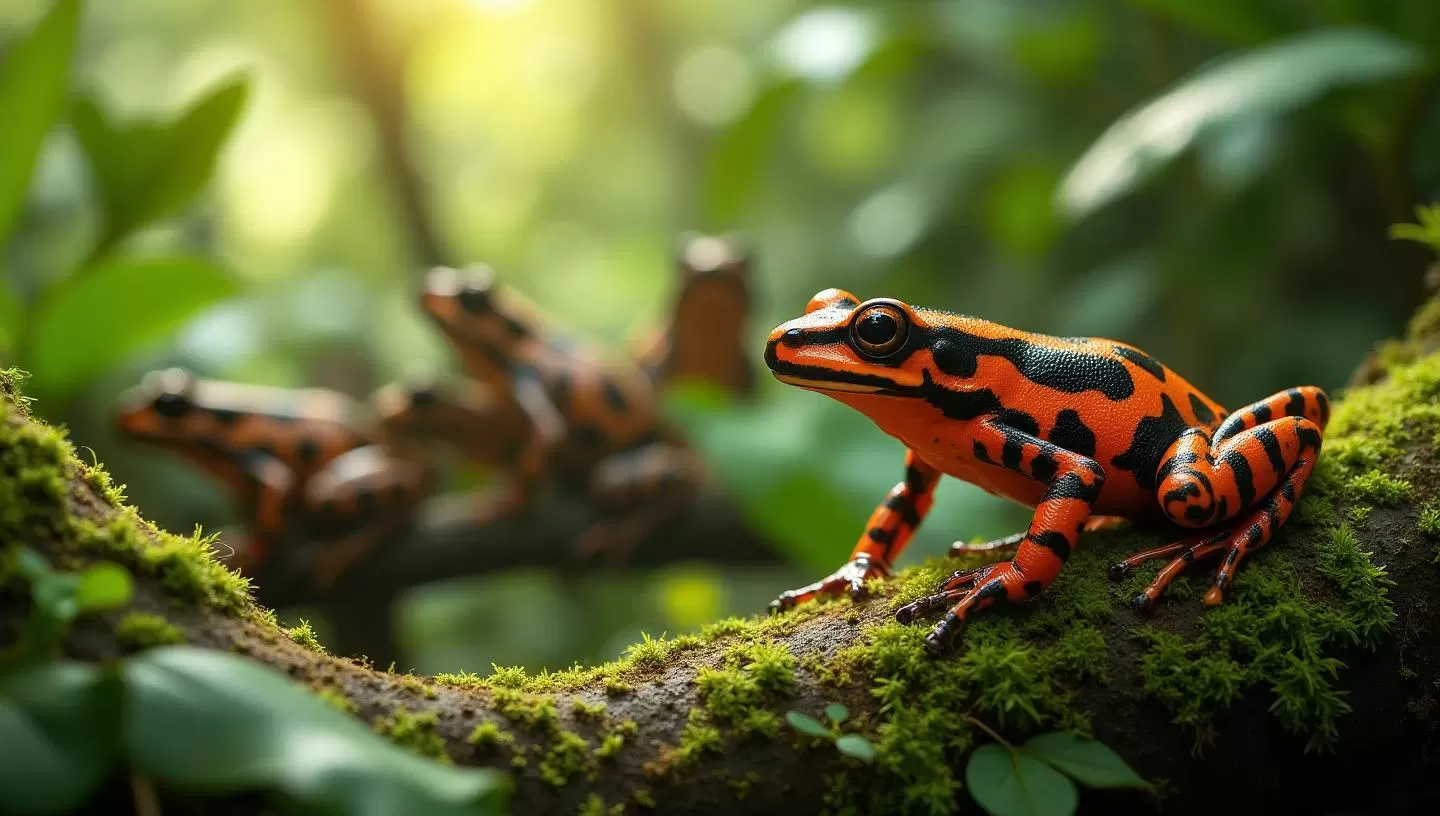
A decades-old error in the classification of a Peruvian poison frog has been resolved by researchers at a leading biodiversity institute. The mistake centered on a crucial specimen known as a holotype, the single physical reference used to formally define a species for the global scientific community.
The Critical Role of Holotype Specimens
A holotype serves as the definitive example of a species. When scientists encounter a potential new organism, they must compare it directly to the holotype to confirm its identity. This system creates a universal standard, ensuring researchers across the globe are referring to the exact same species when they use a scientific name.
The Origin of a Catalog Mix-Up
The issue began in 1999 when a scientist published the description of a new frog species, Dendrobates duellmani, based solely on a published photograph of a vibrant specimen. The photo was linked to the institute's collection. However, a critical administrative error occurred: the researcher was provided with an incorrect catalog number for the photographed frog. Consequently, a different, brown-colored specimen was incorrectly designated as the name-bearing holotype for the new, colorful species. The actual frog in the photograph existed in the collection but was filed under a different number.
Unraveling the Error Through Scientific Sleuthing
The discrepancy was uncovered years later when specialists studying related frogs requested to examine the holotype. They immediately noted the mismatch between the famously colorful frog in the literature and the dull brown specimen associated with its name. This discovery launched an investigation into the collection's historical records. By meticulously cross-referencing old field notes, photographs, and catalog entries, researchers successfully matched the original published image to its correct specimen, finally rectifying the two-decade-old error.
Reclassification and Understanding Species Variation
This correction led to a significant reclassification. The frog once considered a unique species is now identified as a striking color variant of the Amazon poison frog, Ranitomeya ventrimaculata. This case perfectly illustrates how visual differences can be misleading. Populations with vastly different colorations can still belong to the same species, sharing genetics and the ability to interbreed. Comprehensive collecting often reveals a spectrum of variation within a single species.
Evolving Definitions in the Digital Age
This incident underscores the enduring importance of physical museum collections while prompting modern questions about defining holotypes. In an era of rapid biodiversity loss, there is pressure to describe species quickly, sometimes with incomplete data. The concept of the holotype is expanding to become an "extended specimen," encompassing not just the physical animal but all associated data—genetic sequences, audio recordings of calls, and CT scans. While these digital assets are invaluable, the physical specimen remains irreplaceable for verification.
Why Physical Specimens Are Irreplaceable
Relying exclusively on photographs for species description is considered poor practice. A physical specimen allows for reproducible and verifiable research. Measurements, internal anatomy, and genetic sampling can be rechecked. A photograph is a limited, two-dimensional representation that cannot be re-examined for new details. The original error occurred precisely because the description was detached from the actual specimen, highlighting the risks of bypassing the tangible evidence.
A Satisfying Resolution for Biodiversity Science
Correcting this long-standing mistake was a deeply rewarding achievement for the collections team. For over twenty years, the error had been perpetuated in scientific papers. Fixing the record exemplifies the dynamic, detective-like work inherent in managing natural history collections, where new discoveries and corrections are continually made, ensuring the accuracy of our understanding of the natural world.