Middle East Air Defense Munitions Race
The Middle East conflict's trajectory hinges on a critical resource battle: advanced air defense munitions held by the US, Israel, and Gulf nations against Iran's drone and missile arsenal. This "grim calculus" dictates the war's evolving phase.
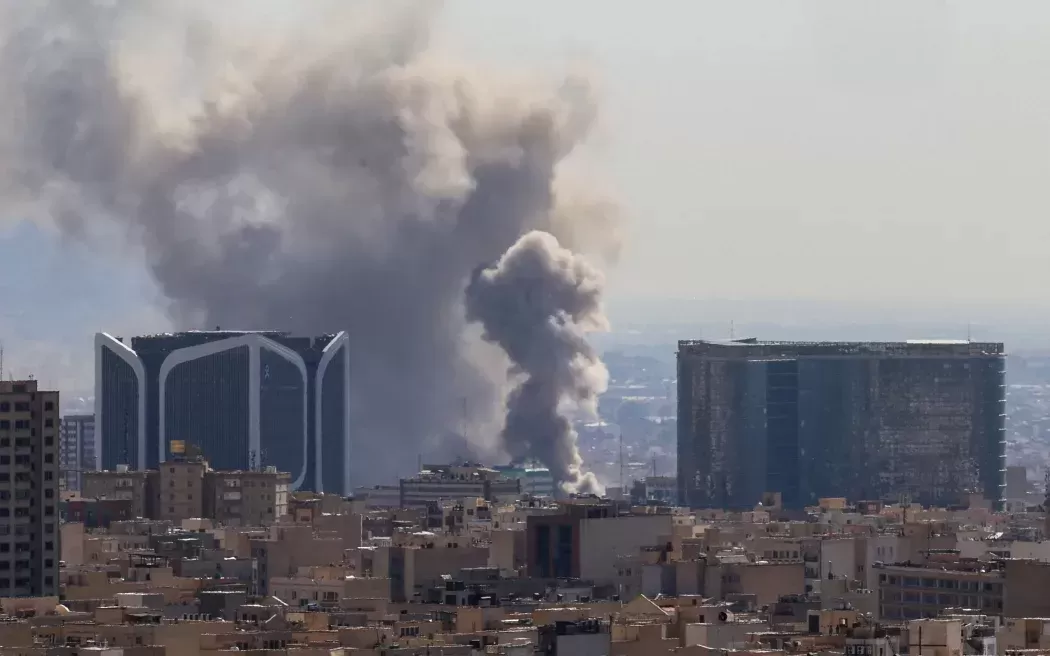
The ongoing Middle East conflict's trajectory and length hinge on a crucial balance: Iran's missile and drone reserves against the vital air defense munitions held by the US, Israel, and Gulf states, according to experts.
Since Saturday, Iran and its allies have launched over a thousand strikes across multiple countries, attempting to counter intense US and Israeli operations. Lacking a competitive air force, Iran heavily relies on its missile and drone arsenal. The extensive reach of Iran's retaliatory attacks marks the widest regional conflict since World War II. Meanwhile, US and Israeli aircraft have struck numerous targets within Iran without suffering losses.
The US and Israel are actively targeting Iran's missile infrastructure, including launchers, storage sites, and personnel, in an effort to deplete its capabilities. Analysts describe the conflict as a "salvo competition," where the side with more ammunition in its "magazines" holds an advantage. The exact size of Iran's missile inventory remains a significant unknown.
While Iranian attacks on Israel have decreased in frequency over the past 36 hours, they have resulted in casualties. Analysts suggest Iran may be conserving its missile stocks or facing limitations in its firing capacity. Furthermore, Iran possesses fewer long-range missiles capable of reaching Israel, and many drones targeting Israel are intercepted. Internal disarray within Iran, possibly due to leadership decapitation strikes, may also be hindering coordinated attacks.
Iran's strategy appears to be wearing down its adversaries through attrition, aiming to erode civilian morale and increase the financial burden of the conflict. As one expert noted, perfect defense is unattainable, and even a single successful strike on critical infrastructure like a university, hospital, or power plant can be extremely costly.
Past conflicts have shown that the availability of air defense missiles significantly influences the duration of fighting. Nations involved are emphasizing their defense capabilities to reassure their populations. For instance, the UAE has stated it possesses substantial munitions reserves for sustained interception. They report intercepting a vast majority of incoming ballistic missiles, cruise missiles, and drones.
Iran has also targeted US military and civilian infrastructure in several Gulf states, causing damage. Saudi Arabia has seen oil infrastructure affected, and a British military base in Cyprus was targeted. Qatar has also reported successful interceptions of multiple aerial and missile threats, claiming to have downed fighter jets, cruise missiles, ballistic missiles, and drones.
The depletion of air defense stockpiles could force Israel and the US to cease offensive operations and pursue a negotiated settlement. While Israel cannot withdraw, Gulf states are currently bearing a significant brunt, and their munitions reserves are being heavily drawn upon. If Iran exhausts its missile supplies, it may be compelled to seek peace and focus on rebuilding.
The considerable cost and limited supply of advanced weaponry are critical factors. Intercepting a drone is significantly more expensive than producing one, and the replenishment of advanced US-made munitions is slow, especially given high demand from other global hotspots like Ukraine and Taiwan.